SEO is evolving, and AI is taking over search. SEO & AI – A Practical Beginner’s Guide shows absolute beginners how to create content that ranks for humans and AI alike – step by step, with practical examples and actionable prompts.
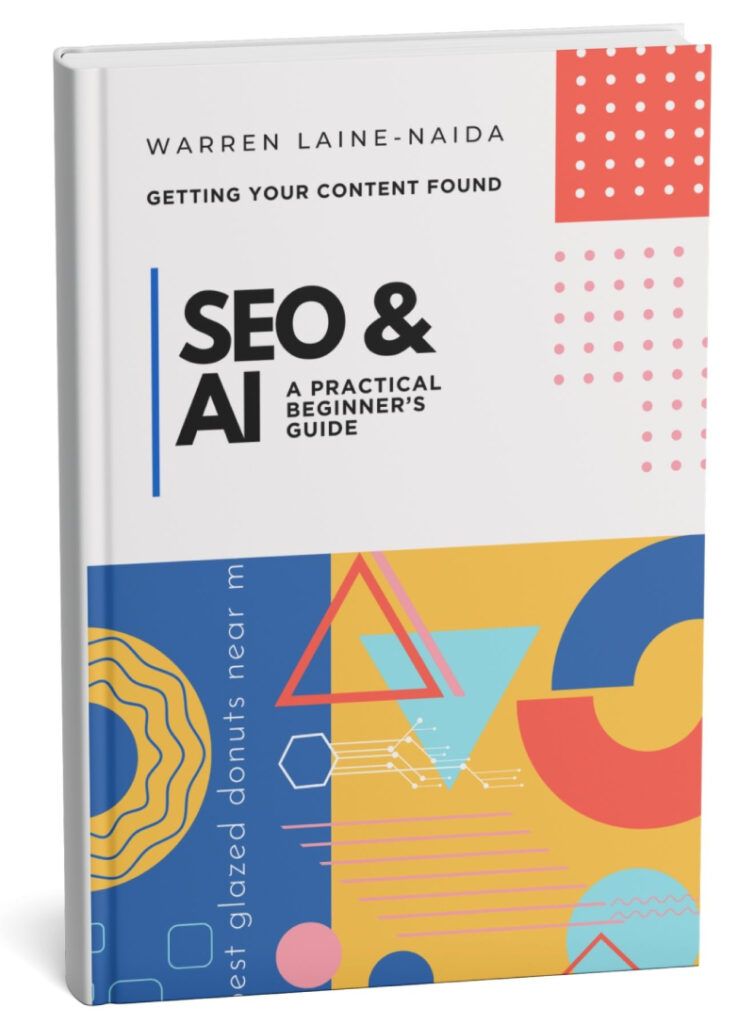
SEO & AI is available in English and soon in German
as a paperback, PDF, or eBook. 181 pages.
SEO and AI move fast. So why a book? Simple. It’s built for the classroom – and for saving time. No tab-hopping, no rabbit holes. Just open it. Perfect for beginners.
SEO is changing – but the basics still matter.
SEO focuses on entities, structure, and genuinely helpful content. LLMs (just like people and traditional search machines) reward clarity, not spam.
SEO & AI – A Practical Beginner’s Guide is the ultimate step-by-step handbook for absolute beginners who want to succeed in the new world of search.
Practical. Clear. Beginner-friendly. Future-focused.
Learn how to:
- Understand AI-driven search and layered visibility
- Find topics and keywords with AI
- Structure and write content that ranks for humans and AI
- Automate repetitive SEO tasks without losing control
With practical examples, AI prompts, and actionable workflows, this book makes SEO easy for beginners. Perfect as a standalone guide or as a companion to your learning course.
This book moves beyond the theory. It includes material from my articles and my SEO courses, and more than 75 Quick Check Questions to test your knowledge chapter by chapter.
Take control of your digital visibility – start mastering AI-powered SEO today!
What you will find in the book
PART 1: Understanding the Basics
Ch. 1 – What is SEO? Ch. 2 – What is Artificial Intelligence (AI)? Ch. 3 – SEO Before and After AI
PART 2: The New Search Landscape
Ch. 4 – How People Search Today Ch. 5 – Beyond SEO – AEO, GEO & AI Search Ch. 6 – Layered Visibility (Core Concept)
PART 3: Content That Works (For Google & AI)
Ch. 7 – Understanding Search Intent Ch. 8 – Finding Topics and Keywords (with AI) Ch. 9 – Writing SEO Content with AI Ch. 10 – Making Content AI-Readable
PART 4: Practical SEO Workflows
Ch. 11 – Your First SEO Article (Step-by-Step) Ch. 12 – Using AI the Right Way Ch. 13 – On-Page SEO Basics
PART 5: Automation & Strategy
Ch. 14 – What is “Automatic SEO”? Ch. 15 – Building a Content Strategy Ch. 16 – Scaling Content with AI
PART 6: Risks, Ethics & the Future
Ch. 17 – Can You Use AI Content for SEO? Ch. 18 – SEO Mistakes Beginners Must Avoid Ch. 19 – The Future of SEO
BONUS SECTION
Ch. 20 – Practical AI Prompts for SEO Ch. 21 – Tools & Resources
PART 7: Going Deeper on GEO
Ch. 22 – Entities: Who Are You on the Open Web? Ch. 23 – How RAG Actually Works (And Why It Changes Everything) Ch. 24 – AI Overviews: Anatomy of a New Search Result Ch. 25 – Platform Differences: Perplexity, ChatGPT, Claude, Gemini Ch. 26 – Testing Your GEO: A Monthly Practice Ch. 27 – Your GEO Action Plan: Start Here, Go From Here
SEO and AI: Let’s Talk About What’s Actually Happening.
Search is changing. That’s not new. Search has always been changing. But this time it feels different – and I think it is.
AI is now part of how search works – not coming. Here. Google is using it. Perplexity is built on it. ChatGPT is answering questions that your website used to answer. So the question isn’t whether AI SEO matters. The question is: what do you do about it?
Traditional search vs. AI search
In traditional search you are fighting for position – a ranked link that users choose to click.
In AI search you are fighting for inclusion – being cited, synthesised, or referenced in a generated answer that may never produce a click at all.
The goal shifts from ranking well to being citable, semantically clear, and contextually trusted. AI systems pull from multiple sources, extract relevant passages, and build their own answer. Your content either makes it into that answer or it doesn’t. That’s the new game.
So what is AI SEO, really?
It’s using AI tools to help your website get found, understood, and trusted – not just by Google, but by the AI systems people are turning to for answers. Things like Perplexity, Google’s AI Overviews, and yes, even Claude.
The old game was keywords. Stuff enough of the right words in, rank higher. That’s mostly done now. Today, it’s about whether a search engine – or an AI – actually understands what your page is saying and whether it trusts you enough to recommend you.
What changes with AI in the mix?
Quite a lot, actually. BUT, Bad SEO = invisible to AI. If Google can’t find you, AI won’t either.
AI reads context. It picks up on tone, intent, and meaning – not just matching words to words. So writing naturally, for real humans, with real answers to real questions? That matters more now, not less.
Some tools help you see trends before they peak, automate the boring stuff like audits, and figure out why your traffic dropped last Tuesday. You don’t have to do all of this manually anymore. That’s genuinely useful.
And if you want a chance at being cited in an AI summary – the kind that appears at the top of a search result before anyone clicks anything – structure helps. Schema markup, FAQ sections, clear headings. Give AI a clean path to your content, and it’s more likely to use it.
What stays the same?
AI citations don’t need a GEO hack playbook. If you destroy your SEO, you destroy your AI visibility.
Focus on entities, structure, and genuinely helpful content. LLMs (just like people and traditional search machines) reward clarity, not spam.
Scaled GEO spam and “too much SEO” are risky, and this harms both organic traffic and the likelihood of being cited in AI answers. Read more: https://lilyraynyc.substack.com/p/your-geo-strategy-might-be-destroying
Rankings strongly influence which URLs enter the candidate set, but semantic relevance, extractability, and trust decide which of those get cited. Read more: https://x.com/i/status/2033361513583652961
Three things worth doing right now
First, add schema markup to your important pages. The FAQ schema and the How-To schema are good starting points. They help AI systems pull your content into answers quickly.
Second, build out your topics properly. One blog post about a subject isn’t authoritative. A cluster of well-connected, useful content is. Think of it like a small library rather than a single pamphlet.
Third, keep an eye on your competitors. Real-time. Not once a quarter. Things move faster now.
Here’s the bottom line
AI SEO isn’t a trend you can wait out. It’s just SEO now – updated for how search actually works. The good news is the fundamentals haven’t disappeared. Write well. Be genuinely useful. Structure your content clearly. Be consistent.
That’s still the job. The tools around it just got smarter.
Is AI really changing SEO, or just changing who gets it wrong faster? A practical reality check for small teams who want results, not noise.
Interested in more about SEO and AI?
Click below to check out my articles, or contact me!