Last Updated on May 2, 2026
Most businesses treat their Google Business Profile as an admin task – fill in the address, upload a few photos, collect some reviews, done. That’s a missed opportunity. Your GBP has quietly become one of the most powerful assets in your marketing stack: a local ranking signal, an extension of your paid ads, and increasingly, a data source that AI uses to decide whether your business gets cited as an answer.
Tools like Google Business Profile, Bing Places, structured data markup, and location-specific keyword research have been shown to significantly increase local visibility and conversions.
I talked with Stunning Digital Marketing’s Rob Cairns about the importance of a Google and Bing business profile in a recent podcast. You can check that out below. You may also find my AI Citation Readiness Scorecard useful! Read on.
“Your Google Business Profile is not a directory listing. It is your entity’s proof of existence on the open web. AI systems cross-reference your name, address, category, and reviews to decide whether your business is real and trustworthy enough to cite. Inconsistency across those signals doesn’t just hurt your local rankings – it makes you invisible to AI.” Warren Laine-Naida
What Google (and Bing) Actually Look For
When customers search for you, search engines assess three key things: how relevant you are to the local search, how far away you are from the searcher, and how well-known you are locally – relevance, distance, and prominence. Your GBP is the primary lever for all three.
The most underestimated ranking signal is your primary business category. This single field carries more weight than most businesses realize – and most businesses guess at it rather than checking what their best-positioned competitors actually use. After that, the services and products sections are chronically underused.
Keyword-rich service descriptions help with long-tail discovery for exactly the specific queries your customers are typing. And reviews matter not just for trust, but for the language inside them: naturally occurring keywords in reviews are signals too. Reply to everyone – that engagement is itself a freshness signal to Google.
NAP consistency – your Name, Address, and Phone Number – across Google Business Profile, Bing Places, Yelp, and other directories is non-negotiable. Inconsistent details confuse both Google and customers.
Bing Places, in particular, is easy to overlook, but with around 10% of search market share, it represents real traffic that most local businesses simply leave unclaimed.
The SEA Connection Nobody Talks About
There’s a direct but rarely discussed relationship between your GBP and your paid advertising performance. When you run Google Local Search Ads, your Business Profile becomes the visual layer of those ads – your reviews, star ratings, and photos appear alongside the ad itself.
That means your organic SEO asset directly influences your paid click-through rate and the trust a potential customer feels before they ever reach your website. The two are not separate channels. A well-maintained GBP makes your ad spend go further.
Going Beyond “Butcher Near Me”
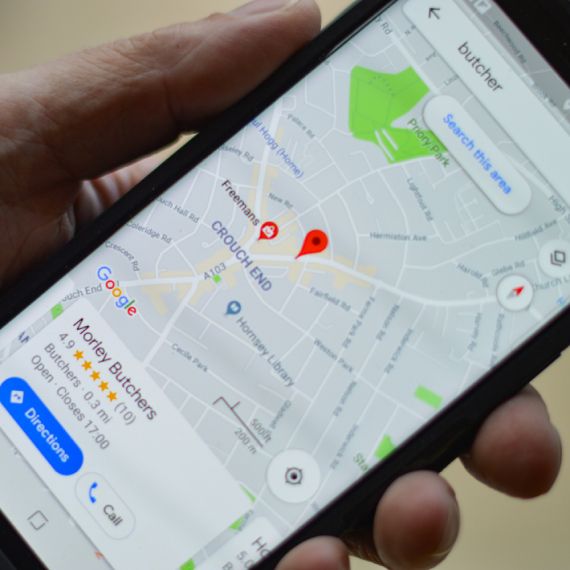
Most local SEO advice stops at obvious category terms. But local SEO is about relevance and intent – you want people who are ready to take action, not just window shoppers. That means targeting hyper-specific intent rather than broad category terms.
Think about what your customers are actually typing – or saying to a voice assistant – when they have an urgent, specific need.
- “Emergency tax advisor for freelancers.”
- “Wedding photographer with rainy weather backup plans.”
- “Vegan bakery gluten-free birthday cake.”
These aren’t edge cases; they’re the searches that convert.
Voice searches tend to be longer and more conversational, and businesses need to optimize for these natural language patterns – which also makes voice search optimization a good way to optimize for AI citations.
The practical tactic: mine your real customer questions from Google Search Console, your reviews, and your inbox. Turn those questions into GBP Q&A entries, posts, and service descriptions. You’re building a mini intent database inside your profile – one that feeds Google Maps queries, voice assistants, and “near me” searches simultaneously.
Your GBP and the AI Citation Layer
This is where things are shifting fastest. AI tools like ChatGPT, Perplexity, and Google Gemini don’t rank pages the way Google does. The better question today isn’t “where do we rank?” – it’s “where are we mentioned?” New success metrics include whether your company is cited in AI responses, whether your brand appears in industry contexts, and whether your structured data is consistent.
Your GBP contributes directly to this. It validates that your business is a real, recognized entity. It establishes consistent NAP signals that AI systems cross-reference. And the activity inside it – reviews, posts, updated services – all contribute to the trust signals that determine whether an AI system pulls your business into an answer.
When someone asks an AI, “best wedding photographer in Bremen for small weddings,” the response isn’t built from a single page ranking. It pulls entities, checks reviews, and looks for consistency across signals. If your GBP, your website, and your reviews all describe the same business in aligned language, you increase the likelihood of being cited rather than ignored.
The shift, as Warren Laine-Naida frames it simply: local SEO is about relevance, trust, and context. That was always true. What’s changed is how many systems – search engines, ad platforms, voice assistants, and now AI – are reading those signals simultaneously. A neglected GBP costs you in all of them at once. An optimized one works across all of them at once.
AI Citation Readiness Scorecard
Check every signal your business controls. See how likely AI tools are to cite you.
Entity consistency 33 pts
- NAP is identical across GBP, Bing Places, Yelp, and your website
- Name, address, and phone formatted the same – no “St.” vs “Street” mismatches
- 15 pts
- Business category matches top competitors’ primary category
- Not guessed – verified against the business’s ranking above you
- 10 pts
- Business description uses the same language as your website’s homepage
- AI systems cross-reference these – mismatched language reduces trust signals
- 8 pts
Content completeness 23 pts
- The Services or products section is filled out with keyword-rich descriptions
- Each service has its own entry, not lumped into a single paragraph
- 10 pts
- Q&A section populated with real customer questions and your answers
- Mined from reviews, inbox, or Search Console – not generic FAQs
- 8 pts
- At least one GBP post has been published in the last 30 days
- Freshness signals matter to both Google and AI aggregators
- 5 pts
Review signals 19 pts
- You have replied to every review – positive and negative – within 7 days
- Engagement is a freshness signal; your replies also inject keywords naturally
- 12 pts
- Reviews mention your specific services or specialities by name
- You can’t control this directly, but it’s a signal worth tracking – and prompting
- 7 pts
Structured data & broader presence 25 pts
- Your website has LocalBusiness schema markup with matching NAP
- Schema gives AI systems a machine-readable version of your entity data
- 10 pts
- Bing Places profile is claimed and matches your GBP exactly
- Bing powers Copilot – unclaimed means invisible to a growing AI search surface
- 8 pts
- You appear in at least one industry-specific directory or citation source
- E.g. Trustpilot – context-specific mentions improve entity trust
- 7 pts
What does “AI citation ready” actually look like? I built a scorecard.
So how did you do?
The signals that make a business citable by AI tools aren’t mysterious – they’re the same signals that have always mattered for local SEO, just read by more systems simultaneously. To make that concrete, here’s a 10-signal scorecard with weighted points across four categories: entity consistency, content completeness, review signals, and structured data presence.
- A business scoring under 30 is largely invisible to AI.
- Between 55–75 means you’ll appear for obvious queries but get skipped for specific, high-intent searches.
- Above 90, you’re in the group of businesses AI tools actually trust enough to cite by name.
The highest-value, lowest-effort move for most businesses: NAP consistency (15 points) and LocalBusiness schema markup (10 points). Together, that’s 25% of your maximum score, and both can be fixed in a single afternoon.
Further Reading
Photo by henry perks on Unsplash. Thank you!