Last Updated on March 27, 2026
A practical reality check for small businesses and nonprofits
Let’s clear something up right away.
AI is not coming to replace your team. And it’s not some expensive, complicated technology reserved for corporations with deep pockets. It’s a set of tools – useful ones, if you use them well. Confusing ones, if you believe the hype.
The problem isn’t AI. It’s expectations. Join me together with Bridget Willard in our latest video to help you make sense of AI and SEO for your small business, nonprofit, or school!
“AI isn’t this all-powerful being that’s going to replace everyone. We have to reframe it and think: AI is a practical set of tools that will take over our everyday boring tasks… it’s our expectations that are the problem.” Warren & Bridget The Reality of AI & SEO video
What AI Is Actually Good For
Think of AI as a really capable assistant – not an autopilot.
It works best when it supports your thinking, not when it replaces it. For small teams already stretched thin, AI can help with four things in particular:
Drafting and structuring content – outlines, blog drafts, and FAQ sections, generated quickly from your ideas.
Simplifying language – turning complicated text into something your audience actually wants to read.
Repurposing content – one blog post becomes social posts, a newsletter snippet, a website FAQ.
Brainstorming – topics, questions, article structures, all based on what your audience is already asking.
AI saves time. It does not save a bad strategy.
“The best SEO tool is simply authentic, structured content that solves a user’s problem. Tools like Semrush or AI are there to help you find those problems and structure your solutions faster.” warrenlainenaida.net/what-is-the-best-tool-for-seo
Where Things Go Wrong
For organisations that run on trust – and that includes most nonprofits and small businesses – AI introduces risks worth knowing about.
Hallucinations are real. AI confidently makes things up. Incorrect facts, wrong figures, fabricated quotes. Use it for outlines and first drafts. Verify everything against primary sources before it reaches your audience. Read more: What are AI hallucinations? Why AI sometimes makes things up.
Trust is not replaceable. For nonprofits especially, credibility is everything. Never fabricate stories or testimonials. Keep sensitive data out of AI tools. Review outputs for bias. And be transparent when AI is involved in sensitive communications. Efficiency is worthless if it costs you your reputation.
Generic is the enemy of effective. AI-generated content often sounds like it was written by nobody, for nobody. Feed it examples of your own writing. Ask it to match your tone. Then go back in and make it sound like you. A meal is only as good as the recipe and the chef. Just like prompting! Learn how to prompt better to get the results you want.
Publishing faster is not publishing better. AI makes it easy to produce a lot of content. That is not the same as producing good content. If a piece isn’t useful or accurate, don’t publish it – even if it only took five minutes to generate.
“It’s easy to get caught up in the hype. But that’s the empty calories of the web, distracting your visitors and bogging down your message.” warrenlainenaida.net/the-power-of-the-simple-website
The SEO Fundamentals Haven’t Changed
Here’s something the AI excitement tends to drown out. Search visibility still depends on understanding your audience, matching what they’re actually searching for, having a clear website structure, and writing in plain, accessible language.
Picture a small business that uses AI to publish 50 blog posts about cat care – but has no clear audience in mind, and buries all that content inside a confusing website. The result? Barely any traffic.
AI can produce content faster. It cannot fix a strategy that was never there to begin with.
AI amplifies your strategy. It doesn’t create one for you.
AI is not interested in your keywords. It wants the bigger picture.
The 10 Fan-Out Categories
In AI search, you don’t rank for a keyword – you become the best source across all the questions surrounding it.
AI doesn’t stop at the keyword – it expands it into an intent network.
When someone searches for “protein powder,” AI systems don’t just match products. They build a complete answer ecosystem like this:
- Semantic Variations & language
→ whey protein, vegan protein, protein shake, supplement - Entity Brands & products
→ Optimum Nutrition, MyProtein, ESN - Attributes Features & specs
→ protein per serving, calories, ingredients, sugar content - Comparison Alternatives
→ whey vs. plant protein, isolate vs. concentrate - Use Case Context
→ muscle gain, weight loss, post-workout recovery - Follow-up Next logical questions
→ when should I take protein? how much per day? - Tutorial How-to
→ how to mix protein shakes, recipes, timing strategies - Commercial Buying intent
→ best protein powder 2026, cheap vs premium, where to buy - Ecosystem Related products
→ shaker bottles, creatine, pre-workout supplements - Credibility Trust & perspectives
→ nutritionist opinions, fitness influencers, studies
If your page only targets “protein powder”, you’re invisible to AI systems. If AI can pull from your content across multiple angles and include you.
So for SEO or content strategy:
- Don’t just optimize for one keyword
- Cover all 10 angles around a topic
- That’s how you win visibility in AI search/overviews
“Instead of outsourcing your thinking, outsource the tasks – so that you have more time to think about your business, what you want your business to be known for.” Warren & Bridget The Reality of AI & SEO video
AI citations don’t need a GEO hack playbook. If you destroy your SEO, you destroy your AI visibility.
Focus on entities, structure, and genuinely helpful content. LLMs (just like people and traditional search machines) reward clarity, not spam.
Scaled GEO spam and “too much SEO” are risky, and this harms both organic traffic and the likelihood of being cited in AI answers. https://lilyraynyc.substack.com/p/your-geo-strategy-might-be-destroying
Rankings strongly influence which URLs enter the candidate set, but semantic relevance, extractability, and trust decide which of those get cited. https://x.com/i/status/2033361513583652961
A Simple Workflow That Actually Works
Instead of getting distracted by which tool to use, focus on the process.
Step 1 – Start with a real question
Check your customer emails, FAQs, and social media comments. These tell you exactly what your audience wants to know, in their own words.
Step 2 – Define what you want the content to do
Should it educate? Build trust? Answer a common question? Encourage action? Decide before you write a word.
Step 3 – Give AI good instructions
The more context you provide, the better the output. Something like: “Draft an 800-word blog post answering this question for beginner pet owners. Use plain language. Include a short introduction, three practical steps, a FAQ section, and a call to action.” That kind of prompt gives you something worth working with.
Step 4 – Do a proper human review
Before anything goes live: fact-check it, add your own examples and insights, adjust the tone, optimise the headings and keywords, and simplify anything that still sounds complicated.
Step 5 – Publish with a purpose
Share it when your audience is active. Put it in your email newsletter. Check engagement after a week and adjust your approach.
“AI supports you, it doesn’t replace you.” warrenlainenaida.net/beyond-algorithms-using-ai-to-enhance-audience-first-seo
The Real Point
AI isn’t here to replace small teams. It’s here to support thoughtful ones.
Used well, it removes repetitive work, speeds up content creation, and frees you up for what actually matters – strategy, creativity, and building genuine trust with the people you serve.
The most useful question you can ask yourself is this: which tasks should AI handle, and which ones should always stay human? Here’s a starting point:
Let AI draft your FAQ page. You tell your donor’s story. Let AI generate topic ideas. You decide the strategy. Let AI repurpose old content. You build the relationships.
Get that balance right, and you’re already ahead of most.
Teaser image Gemini AI generated of Warren and Bridget.
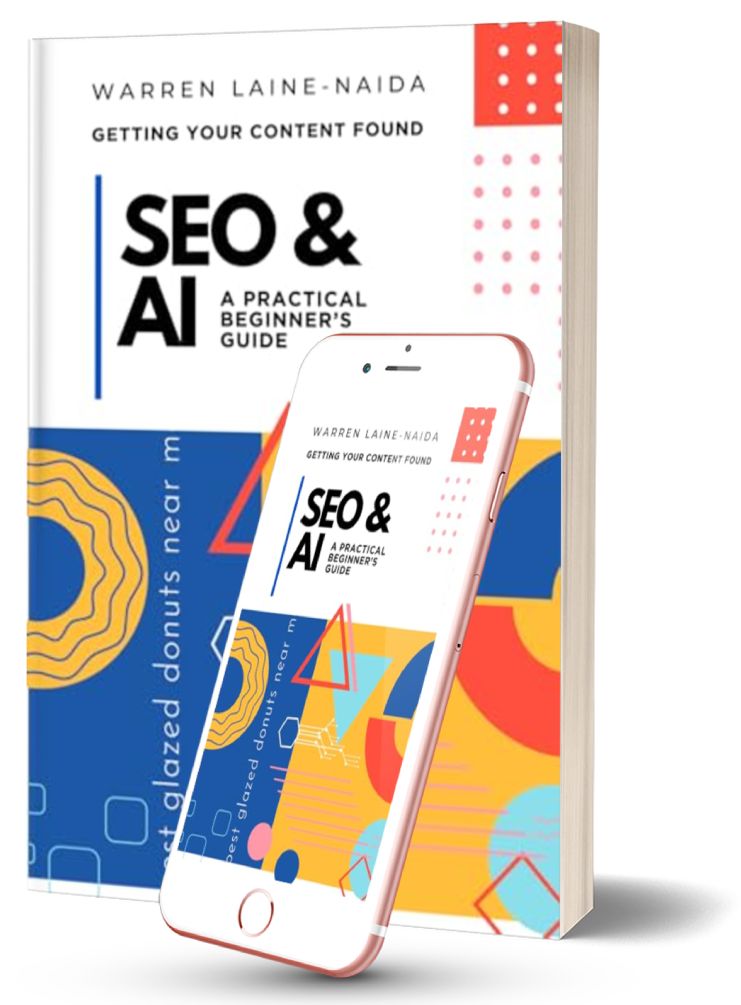
SEO & AI – A Practical Beginner’s Guide
SEO is changing. The basics still matter. And this book makes both simple.
No tab-hopping, no rabbit holes – just a clear, step-by-step handbook for anyone starting in the new world of search.
Learn how to find keywords with AI, write content that ranks, and automate the repetitive stuff – without losing control.
Practical examples. AI prompts. 75+ knowledge checks. A companion book to “SEO All You Need to Know.”
Open it. Learn it. Take control of your digital visibility. Paperback and eBook.