Last Updated on March 22, 2026
What Generative Engine Optimization means for your small business, nonprofit, or school – and what actually to do about it.

Part 1
So, What Even Is GEO?
You’ve heard of SEO. You’ve probably spent some time on it. Maybe you’ve even enjoyed it. But there’s a new acronym in town: GEO – Generative Engine Optimization.
Here’s the plain-English version: when someone types a question into ChatGPT, Perplexity, Gemini, or Claude, those AI tools pull information from the web to build their answer. GEO is about ensuring your content is the one they reach for.
It’s not a replacement for SEO. Think of it as the next room in the same house. You still need a solid SEO foundation – GEO just adds a new floor on top of it.
💡 The shift that matters: More people are skipping Google entirely and asking AI directly. If your content isn’t findable, quotable, and trustworthy in those systems, you’re invisible to a growing chunk of your audience.
What AI systems actually care about
Generative AI doesn’t rank you. It cites you. To get cited, your content needs four things: real quality and depth, a structure machines can parse, a reputation built across the open web, and no technical barriers blocking AI crawlers from reading it. More on all of that shortly.
“Visibility is moving from keyword positioning to entity credibility.” Human-Based SEO: Why the Future of Search Is Human
Part 2
Good SEO Is Still Your Best GEO Strategy
Don’t let anyone tell you SEO is dead. AI systems are trained on – and actively retrieve from – the open web. If Google trusts you, there’s a very good chance AI does too.
Research by Grow and Convert looked at how Google rankings relate to AI citations. The numbers are worth knowing:
| Google Ranking | All AI (avg.) | Claude | ChatGPT | Perplexity |
|---|---|---|---|---|
| Top 10 | 60% | 30% | 70% | 75% |
| Top 3 | 60% | 20% | 72% | 80% |
Perplexity is especially loyal to well-ranked content – 80% of top-3 results show up there. The takeaway? Earn your Google rankings, and AI visibility tends to follow.
The SEO pillars that matter most for GEO
Focus on topical authority (covering a subject deeply, not just sprinkling keywords), proper heading structure (H1 → H2 → H3 – not decorative, but meaningful), quality backlinks from real sources, and regular content updates.
AI tools using live retrieval (called RAG – Retrieval-Augmented Generation) prioritise fresh content. An article last updated in 2019 is not their first choice.
Part 3
Your 8-Step GEO Checklist
These aren’t abstract concepts – they’re things you can actually work through one by one.
- Test your own visibility
- Go ask ChatGPT, Perplexity, or Gemini a question your audience would ask. Does your brand show up? Where? In what context? Make this a monthly habit.
- Answer questions, not just topics
- LLMs are trained to answer questions. Structure your content around the “W questions” -Who, What, How, Why – that your audience actually types. Your FAQ page is more powerful than you think.
- Write quotable snippets
- AI loves a clean, self-contained 1–3 sentence answer it can lift and use. Lead with the answer (TL;DR first, context second). Skip the preamble and the promotional fluff.
- Use semantic HTML and structured data
- Tags like <article>, <section>, and <blockquote> help machines understand your content’s structure. Adding Schema.org markup (FAQPage, HowTo, Article) makes it even clearer. Your developer or WordPress plugin can help.
- Don’t block the bots
- Check your robots.txt file. If GPTBot, PerplexityBot, or CCBot are blocked, those tools can’t see you. Also: content behind logins, paywalls, or aggressive cookie walls is invisible to AI.
- Transcribe your video and audio
- AI can’t watch a video. If your best content lives on YouTube or in a podcast, add a full text transcript. This turns audio gold into searchable, citable text.
- Show up on trusted platforms
- LinkedIn Articles, Medium, Reddit, and Quora are all places AI systems are trained to trust. Repurposing a blog post as a LinkedIn article or answering a Quora question in your field is simple, free, and surprisingly effective.
- Be consistent about your brand name
- AI systems identify “entities” – your brand as a recognisable thing in the world. If you spell your business name three different ways across your website, LinkedIn, and local directories, you’re confusing the machine. Pick one version and stick to it everywhere.
“Open, structured content on your own domain is also how you stay visible as AI-powered search becomes the norm – because content that isn’t findable outside the walls won’t be cited, summarised, or recommended by the AI tools your audience is increasingly using to find answers.” Keeping Your Walled Garden Flourishing Yet Accessible
Part 4
A Few Terms Worth Knowing
GEO (Generative Engine Optimization): Optimising your content so AI tools like ChatGPT and Perplexity cite, reference, and recommend it in their answers.
LLM (Large Language Model): The AI technology behind tools like ChatGPT, Claude, and Gemini. Trained on enormous amounts of text to understand and generate language.
RAG (Retrieval-Augmented Generation): When an AI pulls live information from the web to answer a question, rather than relying purely on what it was trained on. Fresh content matters here.
E-E-A-T: Google’s content quality framework: Experience, Expertise, Authoritativeness, Trustworthiness. AI systems use similar signals.
Entity: A specific, recognisable thing – a brand, a person, an organisation – that AI can identify and track across the web. Consistency builds entity strength.
CCBot / GPTBot: Web crawlers used by AI companies to gather content for training. If you block them, they can’t learn from your content.
JSON-LD / Schema.org: A way of adding structured, machine-readable information to your web pages so AI and search engines understand what they’re looking at.
Part 5
Test Yourself: Quick Quiz
See how much has landed. No pressure – it’s a guide, not an exam.
1. What’s the main difference between SEO and GEO?
- SEO is for humans; GEO is for robots
- SEO focuses on search rankings; GEO focuses on being cited in AI answers
- GEO replaces the need for SEO entirely
- SEO only works on Google; GEO only works on ChatGPT
2. Which AI platform shows the highest citation rate for the top-3 Google results?
- Claude
- ChatGPT
- Perplexity
- Gemini
3. What makes content more likely to be quoted by an AI?
- Using enthusiastic, promotional language
- Hiding it behind a login page
- Writing compact 1–3 sentence “snippets” that answer a question directly
- Using only images with no supporting text
Answer Key
- B. GEO is about being cited in AI-generated answers – a natural extension of SEO, not a replacement.
- C. Perplexity -80% visibility for top-3 Google results.
- C. Short, authoritative snippets that answer a question clearly are exactly what AI wants to quote.
Further Reading
Photo by fauxels: https://www.pexels.com Thank you!
Bonus: HTML version of this to take with you (Thanks Claude.ai!)
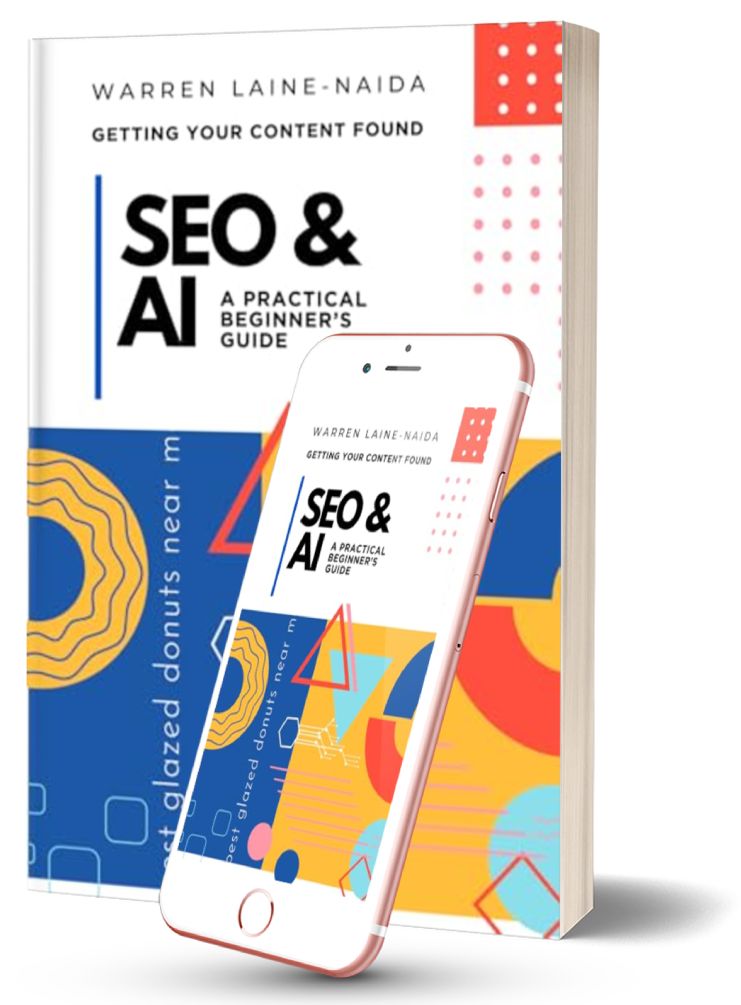
SEO & AI – A Practical Beginner’s Guide
SEO is changing. The basics still matter. And this book makes both simple.
No tab-hopping, no rabbit holes – just a clear, step-by-step handbook for anyone starting in the new world of search.
Learn how to find keywords with AI, write content that ranks, and automate the repetitive stuff – without losing control.
Practical examples. AI prompts. 75+ knowledge checks. A companion book to “SEO All You Need to Know.”
Open it. Learn it. Take control of your digital visibility. Paperback and eBook.
SEO & AI – A Practical Beginner’s Guide
SEO is changing. The basics still matter. And this book makes both simple.
No tab-hopping, no rabbit holes – just a clear, step-by-step handbook for anyone starting in the new world of search.
Learn how to find keywords with AI, write content that ranks, and automate the repetitive stuff – without losing control.
Practical examples. AI prompts. 75+ knowledge checks. A companion book to “SEO All You Need to Know.”
Open it. Learn it. Take control of your digital visibility. Paperback and eBook.