Last Updated on April 3, 2026
Why Every Search Query is a Person Trying to Finish Something
TL;DR – Key Takeaways
- Keywords are symptoms. The real thing you’re treating is a human activity under pressure.
- Constraints are your content map. Time, distance, trust, and availability aren’t obstacles. They’re your site architecture.
- Zero-click is not a threat. It’s a gift. Be the answer before they even land on your page.
- Resilience beats ranking. Build for humans first, and the machines will follow.
The Keyword Game Was Never the Point
“People Don’t Search for Keywords. They Search for Solutions.”
For years, SEO – specifically Local SEO – has been taught as a matching exercise. You find the phrase, you build the page, you wait for the ranking. “Pet Shop London.” “Dog food near me.” Rinse and repeat.
But what nobody tells you at the SEO workshop is that keywords are not the destination. They’re the exhaust fumes. They’re what gets left behind when a real person, with a real problem, fires up a search engine.
Underneath every query is an activity. A goal someone is trying to reach. A task they’re trying to finish before the dog starts looking at them hungrily.
When we optimize for the keyword, we’re optimizing for the symptom. When we optimize for the activity – and for the constraints that are getting in the way of completing it – we’re building something that actually helps people.
And helping people, it turns out, is excellent SEO.
Activities, Tasks, and Why Your Website Probably Gets This Wrong
“Visibility today comes from where people talk about you. Not where you talk about yourself.”
Don Norman wrote a book called The Design of Everyday Things that has very little to do with SEO and almost everything to do with why your website isn’t working as hard as it should. I was recently reading Don’s book and was struck by his core insight: systems fail when they’re designed around features rather than activities.
A feature is “we sell BARF dog food.” An activity is “my dog needs to eat tonight, and I need to solve that today.” BARF stands for Biologically Appropriate Raw Food or Bones and Raw Food.
The activity has urgency. It has stakes. It has a whole sequence of smaller tasks wrapped inside it:
- Realizing there’s a problem
- Deciding where to solve it
- Confirming the solution exists
- Getting there practically
- Feeling confident that the decision was right
Most local business websites address step two, maybe step three. The rest? Left to chance.
This is what we can call a Digital Fluency gap. It’s the difference between a website that exists and one that functions – one that guides a person through their activity rather than just announcing that you’re open for business.
The Missing Piece: Constraints
“Would I write this content if search engines didn’t exist?”
People don’t just have activities. They have constrained activities. They’re trying to accomplish something, but something is in the way.
- Time – “I need this today, not Thursday.”
- Distance – “It has to be close enough that it’s worth the trip.”
- Availability – “What if they don’t have the specific food my unnecessarily fussy Labrador will tolerate?”
- Trust – “Is this place actually good, or is it just the first result?”
- Convenience – “Is there parking, or will I be doing a frustrated loop around the block?”
- Expertise – “I don’t just want to buy something. I want to buy the right something.”
Each of these constraints is a content opportunity. Not a keyword opportunity – a human opportunity.
When someone searches “pet shop open now,” they’re not primarily interested in pet shops. They’re expressing urgency. They have a constraint.
Your job isn’t to rank for that phrase. Your job is to solve that constraint.
Designing for the “Hungry Dog” Moment
Let’s take the activity: buying dog food from a local shop. Let’s walk it through the lens of constraints, and your content strategy practically writes itself.
Urgency
(“I’m out of food, the dog is staring at me”) → Your Google Business Profile needs live, accurate hours. Not “we’re usually open around 9.” Accurate hours. This is Zero-Click SEO – they get the answer on the results page and drive straight to you. You never needed the click. You needed the footfall.
Availability
(“Do they have the bison kibble my dog is obsessed with?”) → Clean, structured category pages. Use Schema markup so that when an AI summarizes your inventory, it gets it right. Your shelves need to exist on the internet, not just in your stockroom.
Convenience
(“Where do I actually park?”) → A directions and parking page. It is not a glamorous piece of content. It will not win you an award. But it is the difference between a customer who arrives and a customer who gives up and goes to the big-box pet chain with the massive car park.
Trust
(“Is this place worth going to?”) → Reviews, yes. But also expert content. A guide to starting BARF feeding. A feeding chart. A “what to do if your dog won’t transition” page. Content that proves you know what you’re talking about before they’ve spent a penny.
Post-Purchase Confidence
(“Did I do the right thing?”) → This one gets overlooked almost entirely. Feeding tutorials. Portion guides. “What to expect in week one” content. This is what turns a transaction into a relationship, and a customer into someone who comes back.
From Constraints to Architecture
“Your content doesn’t need to rank – it needs to travel.”
When you map your site around constraints rather than keywords, something useful happens: your information architecture starts to make sense.
Not “Dog Food London / London Dog Food Shop / Dog Food Store London” – three pages chasing the same intent, providing no real value, fooling nobody.
Instead:
| Constraint | Content |
|---|---|
| Urgency | Opening hours page, Google Business Profile optimized for “open now” |
| Distance | Neighbourhood location pages, accessibility information |
| Availability | Product category pages with schema markup |
| Trust | Reviews, local expertise content, specialization pages |
| Expertise | Guides, FAQs, educational content |
| Convenience | Parking, public transport, directions |
Each page solves a specific problem in a specific moment of a specific activity. That’s not keyword stuffing. That’s design.
And don’t forget: Google Business Profiles – AND Bing Places – offer a link to your website. Use that for a locally relevant landing page! Not your homepage.
Example: Walmart Corpus Christi, Texas, Google Business Profiles. Each location offers unique services. Those services are locally relevant.
- https://www.walmart.com/store/1494-corpus-christi-tx/?veh=seo_loc has a fuel station, a car center, but no wireless service
- https://www.walmart.com/store/470-corpus-christi-tx/?veh=seo_loc has wireless service, a car center, but no fuel station
- https://www.walmart.com/store/5898-corpus-christi-tx/?veh=seo_loc has a photo center, wireless services, but no car center or fuel station
The Resilience Play
“The problem with the designs of most engineers is that they are too logical. We have to accept human behavior the way it is, not the way we would wish it to be.” – Donald A. Norman, The Design of Everyday Things
Here’s the bigger picture, and it matters more now than it did even a year ago.
Search engines are answer engines. Now add AI summaries, voice assistants, zero-click results – and the game is shifting. If your entire strategy is “rank for this phrase and get the click,” you’re building on sand.
What survives is called Resilience Architecture – a structured digital presence built around real human behavior, not search engine mechanics. Content that answers questions before they’re fully asked. A Google Business Profile or Bing Place profile that does the work before anyone visits your site. Pages that make a person feel like they’ve arrived in the right place.
The constraint-based approach gets you there almost automatically, because it forces you to think like the person with the problem, not the marketer with the keyword spreadsheet.
A Practical Starting Point (For Tomorrow, Not Q3)
You don’t need to rebuild everything at once. Start here:
- Audit your hygiene content. Are your hours accurate? Is your address correct everywhere it appears? Is parking information findable? These aren’t glamorous fixes, but they’re the foundation.
- Find the unmet question. What do customers always ask when they walk in? That question is a page that doesn’t exist yet on your website. Write it.
- Own your soil. Don’t build your expertise content exclusively on social platforms you don’t control. Put it on your own website first. Social is amplification. Your site is the ground.
The Big Insight
“Visibility without conversion is expense. Authority without revenue is vanity.”
People don’t search for keywords. They search because they’re trying to finish something – and something is getting in their way.
When you understand the activity, map the tasks, and solve the constraints, you stop chasing an algorithm and start serving a human being. And as I’ve always said: if they can’t find you, they can’t buy from you. But if they can find you – and you’re clearly, immediately, helpfully there – you’ve already done most of the work.
Good SEO isn’t about gaming a system. It’s about being the most useful neighbor in the digital village.
And don’t forget Social Media. While Search Engines generate 24% of traffic to sites on average, Social Media generates 18%. sparktoro.com
Further Reading
“The Importance of Good Content: Helpful – Evergreen – Hygiene Content” warrenlainenaida.net/the-importance-of-good-content-helpful-evergreen-hygiene-content/
“Human-Based SEO: Why the Future of Search Is Human” warrenlainenaida.net/human-based-seo/
“Understanding Local Intent in SEO: What It Is & Why It Matters” by Miriam Ellis on Search Engine Land https://searchengineland.com/guide/local-search-intent
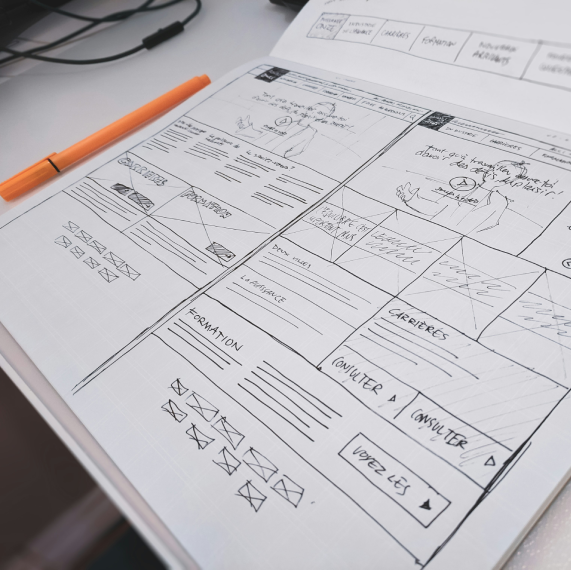
Thanks for the image to Compagnons on Unsplash
This article is rooted in the principles of Don Norman’s Activity-Centered Design and the Digital Fluency framework, because how people behave online hasn’t changed just because the technology has. I read Don Norman’s book late, but better than not at all. https://www.amazon.de/Design-Everyday-Things-Revised-Expanded/dp/0465050654